
BOTM 001 | Co-op Republic Guyana 1970
Cover and Typographic Design by Patrick Munroe
Title: Co-op Republic Guyana 1970: A Study of Aspects of our Way of Life
Published: Georgetown, June 1970 by the Government of Guyana
Author: Various
Editor: L. Searwar
Description: Co-op Republic Guyana 1970 was published by the Government of Guyana in June of 1970. The book contains a series of articles and essays on various aspects of Guyanese culture and history written by former Prime Minister Linden Burnham, ministers, architects, authors, business people, and poets. The inside cover of the text reads: “In this book, the first of its kind, a group of Guyanese authors, each distinguished in his field, have attempted to evaluate our heritage and to indicate paths of the future.” (Co-op Republic, Inside Cover) The book discuses everything from Burnham’s vision for the future of Guyana, Guyana’s economy, social structures, cultural values, poetry, architecture, nature, history, and even the borders of the nation.
Themes of Co-op Republic Guyana 1970
Residues of Colonial History
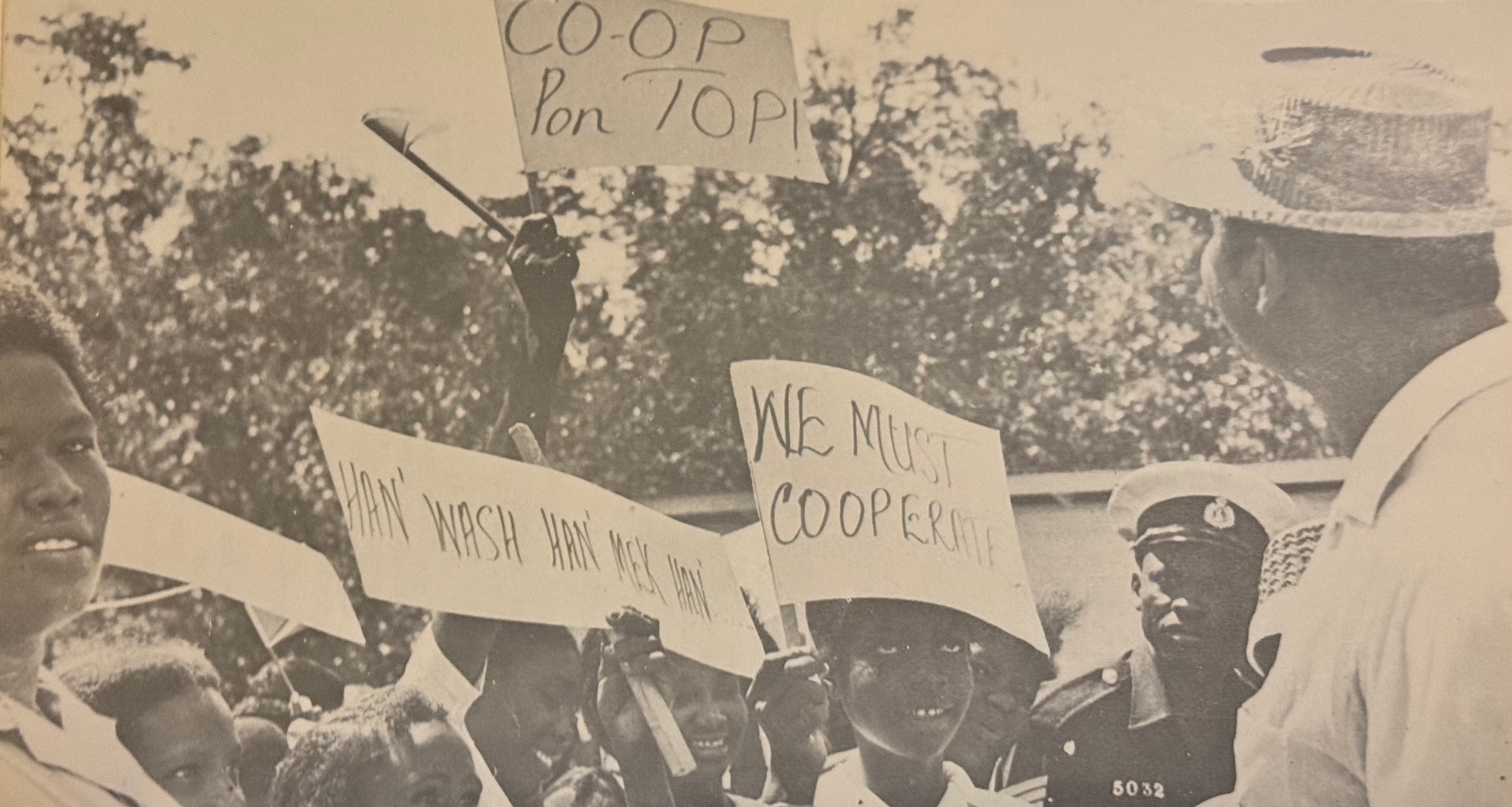
“The enthusiasm of the people of Guyana for the development of their society through the Co-op is reflected in the slogans held aloft by this group of school children.“ (Co-op Republic, 20)
One theme discussed heavily throughout the book is the residue left by Guyana’s colonial history. These years of slavery and exploration have left Guyana with many great challenges ranging from the physical lack of historical documents to the more ethereal distrust of authority.
“Many of the logically, rationally conceived attempts at improving rural conditions, have foundered on the sense of individualism, the refusal to accept the rules of the group as binding when they are not altogether favorable to oneself. (In short, like children, we shout ‘If I not leader, ah not playing’). It has been suggested that possibly our history of frustration and control by others have led us into this impasse.” (Co-op Republic, 76)
A “Self-help” economy
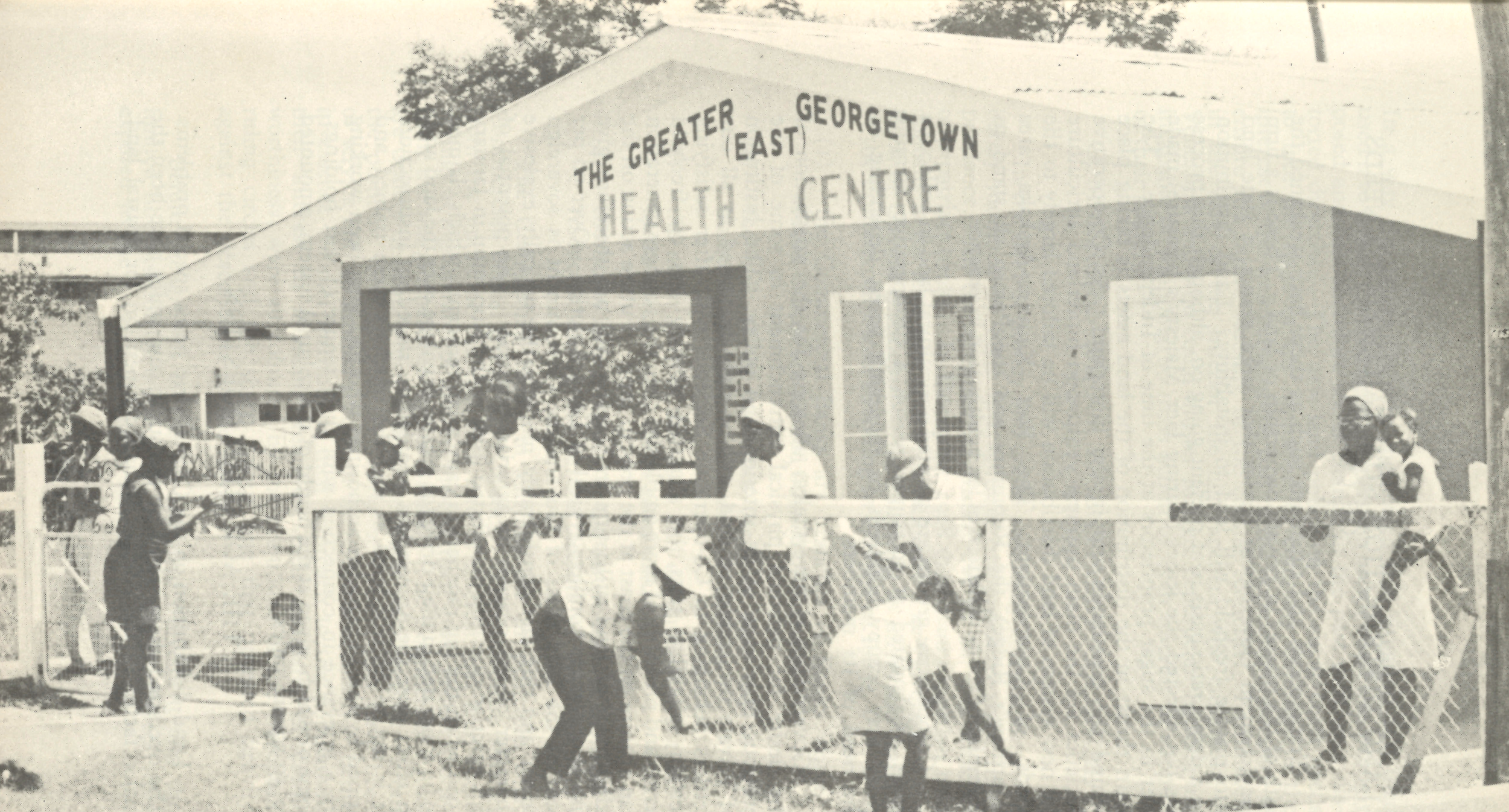
“Self-helpers put the finishing touches to a Health Centre built by the voluntary labour. In four years, the Community Self-Help Movement with Government’s assistance has provided more than $20 million worth of development works, including schools, community centres, roads, air strips, land clearance, and a wide range of other works.” (Co-op Republic, 29)
Another major theme of the book was the self-help movement to develop the country and belief that “…the small man will become a real man…” (Co-op Republic, 91) Throughout the book the government constantly discusses how it needs to be able to build itself up to truly free itself from the chains of its colonial past.
“‘In the course of economic development of any country there are certain basic and strategic resources, which must be owned and controlled by the inhabitants. But from a study of our history it becomes evident that most of these resources have been owned and controlled by non-Guyanese, who have ruthlessly exploited our resources for their own benefit. By means of co-operatives we will be gaining ownership and control of these resources and their exploitation will be primarily for the benefit of Guyanese.’ (Co-operative Republic Budget 1970: Dr. Ried)” (Co-op Republic, 33)
Food
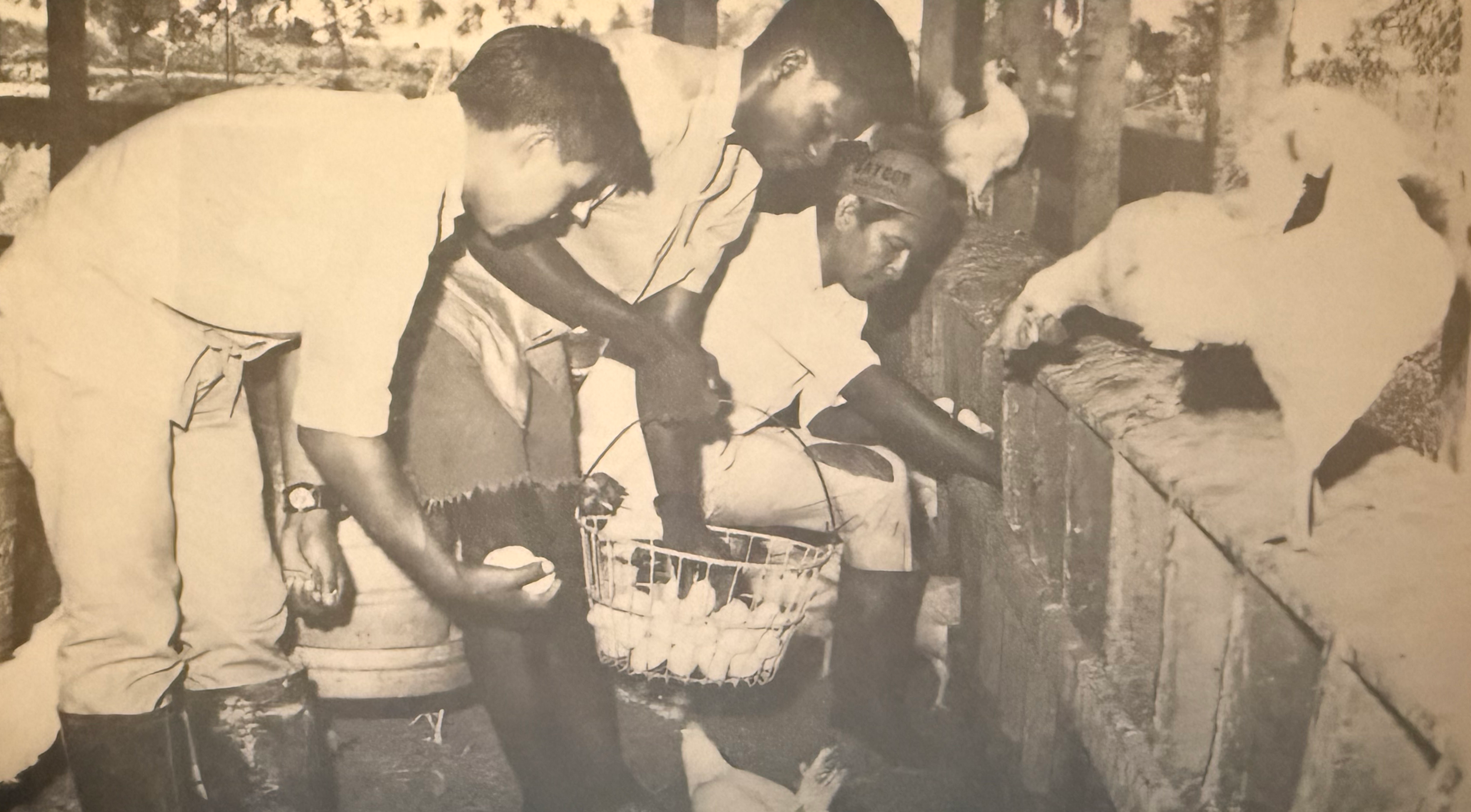
“Amerindian youths are being trained in agricultural techniques at the Agricultural Station at Mon Repos. When they return to their own village, they will play a major part in establishing their communities on a sound economic basis. Agricultural training is part of a development programme which will enable Amerindian to pay a full part in the development of the country.” (Co-op Republic, 204)
One aspect of culture discussed in the book was food and the origins of the many different cuisines that today combine to make up Guyanese food.
“In the realm of food and menus, there has been an almost total assimilation of the various national elements; every Guyanese knows and enjoys the Indian curries and rotis, the Amerindian pepper-pot and the African metagee. The Portuguese have brought their contribution by way of vinga dol and garlic pork…” (Co-op Republic, 90)
Folklore
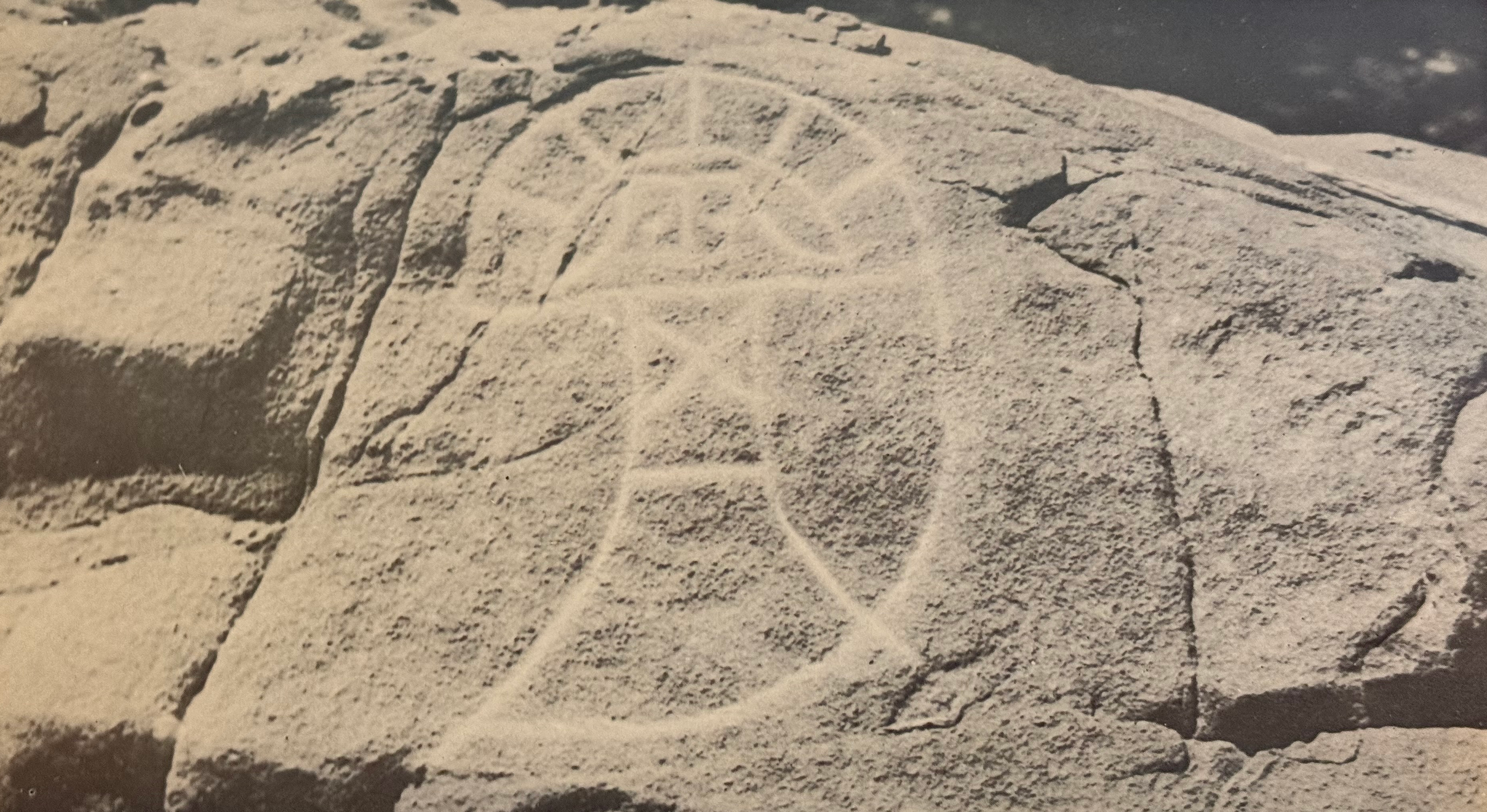
“One of the Timehri rock carvings. A Carib words TIMEHRI means ‘ rock painted,’ and is the name given to the rock paintings or engravings found in the Guyana interior, particularly near the falls and rapids. Legend has it that the TIMEHRI art was the work of the Amerindian folklore god, Amalivaca, who visited Guyana at the time of the Flood. Anthropologists consider that the paintings date back to the 14th century.” (Co-op Republic, 78)
Another major theme of the book is to return to and honor the folklore of Guyana. It is in these stories I believe we can begin to remember or create our history.
“In my view, the folklore of a people is at the root of their being, and to cast it aside is to set oneself adrift culturally - an act which one preforms ay one’s own peril. I would therefore advocate that the Republican society do a lot of rethinking, take a second look at the indigenous Guyanese culture which the mad rush towards ‘progress’ is causing it to jettison in its flight.” (Co-op Republic, 125-126)
Table of Contents:
A Vision of the Co-Operative Republic
Honorary Linden F. S. Burnham,
Prime Minister of Guyana and Chief Architect of the Co-operative Republic
Economic Relations in Pre-Republican Guyana
Eusi Kwayana,
Chairman of Guyana Marketing Corporation and Co-ordinating Elder of ASCRIA (African Society for Cultural Relations with Independent Africa)
Planning in the New Society
Winston King,
Chief Planning Officer of the Ministry of Economic Development and Director of Caribbean Development Bank
The Social Structure of Guyana
Pat Robinson,
Head of Sociology Department, University of Guyana
Cultural Values in the Republic of Guyana
A. J. Seymour,
Poet and Critic
Anthology of Poems - “Tomorrow Belongs to the People”
A. J. Seymour
Martin Carter
Wilson Harris
Wordsworth McAndrew
Frank Dalzell
Milton Williams
James W. Harper-Smith
B. A. Agard
Amette Warren
Henry W. Josiah
Guyana - A Cultural Look
Wordsworth McAndrew,
Poet, broadcaster, and authority on folklore
Building Under our Sun
Rory Westmaas,
Chief Architect of the Ministry of Works, Hydraulics and Supply
Wilderness and Wildlife in Guyana
N. O. Poonai,
Practicing Solicitor and authority on natural resources conservation
The Thrust into the Hinterland
Honorary H. O. Jack,
Minister without Portfolio with special responsibilities for Co-operatives, Youth and Interior Development
Historical Background to the Co-Operative Republic
Vere T. Daly,
Lecturer at Government Teacher’s Training College and author
Windows on Guyanese History
Tommy Payne,
Government Archivist and author
The Story of the Borders
R. Collins,
Senior Civil Servant of the Ministry of External Affairs